Tuesday, July 10, 2012

Early July/Nature Notes

Hot and Muggy, but the blossoms in wetland areas are lovely!

Largest square: Cedar waxwings seem to be everywhere. Perhaps they always are and I am just paying more attention this year.

Working clockwise: purple loosestrife  (Lythrum salicaria) - a beautiful but invasive weed that now occurs in every U.S. state except Florida; swamp milkweed (Asclepias incarnata) - a lovely plant visited by bees and butterflies; Canada thistle (Cirsium arvense) - also known as lettuce from Hell thistle, which says a LOT, don't you think?; white berries of the red osier dogwood (Cornus servicea) - inedible berries; and heal-all (Prunella vulgaris) - once proclaimed a holy herb that could drive away the devil, but I have never tried it so don't now if it works on ALL devils.

FYI: I list the botanical names because many common names vary from place to place but their Latin names do not.

Please visit Michelle at Rambling Woods for more
NATURE NOTES.

Monday, July 9, 2012

Bundle of 21/Our World

 Bundle of 21 bales

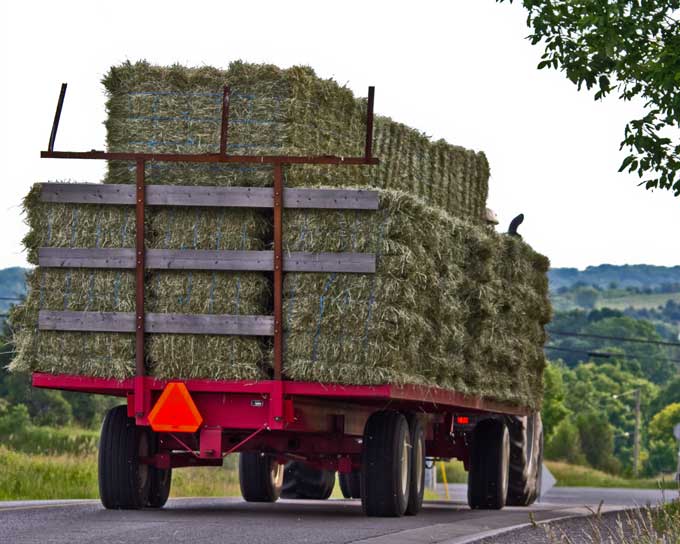
Most of the hay bales I see in farmer's fields around East Gwillimbury are round, but some are square (Yes, really cylindrical and rectangular). What you see in the photo above is not one bale but 21 bales ready to be hauled away by truck.

Small bale leaving baler to enter Bale Baron

No, farmers did not hand stack these bales with pitchforks, then tie them together with string. A Bale Baron did it.

Bundle of 21 bales leaving the Bale Baron

This was the first time I had ever seen a Bale Baron work...and I was fascinated.

Dropping the bundle


Many bundles being trucked away

More photos from Our World can be seen by clicking HERE.

Friends who encourage me

Blog Archive

About Me

My photo
East Gwillimbury is a rural town less than an hour north of Toronto, Canada's largest city. My family calls me CameraGirl because I take my camera with me wherever I go.